22 December 2023
Futures design
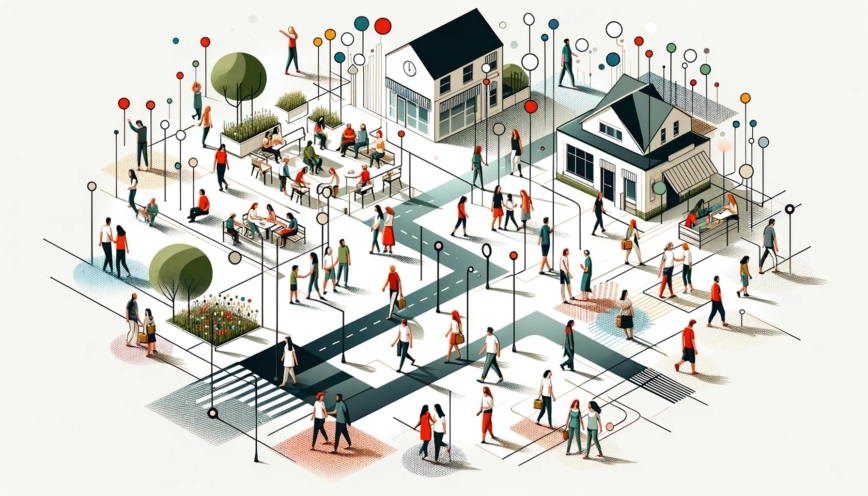
Humans are capable of a unique trick: creating realities by first imagining them, by experiencing them in their minds. When Martin Luther King said, ‘I have a dream’, he was inviting others to dream it with him. Once a dream becomes shared in that way, current reality gets measured against it and then modified towards it. As soon as we sense the possibility of a more desirable world, we begin behaving differently, as though that world is starting to come into existence, as though, in our minds at least, we’re already there. The dream becomes an invisible force that pulls us forward. By this process, it starts to come true. The act of imagining something makes it real.
Brian Eno — from the Board messages | The Long Now.
In what Brian Eno describes, I recognize the foundation of futures design. With our assistance, and that of the Danish Design Centre (Copenhagen), the Ministry of Health Welfare and Sport employs futures design as a methodology to tackle certain complex issues. Issues such as the increasing inactivity of our society, result in enormous future healthcare costs and significant human suffering. Or the erosion of trust in the government, leading to increasingly ineffective measures and policies. This article delves into the concept of futures design.
The essence of futures design lies in envisioning a future scenario. A scenario that comes to life through making it experiential, either by articulating or visualizing it. This involves allowing fictional characters to tell stories or experience that world, or creating products or services that are commonplace in that future. Or rituals. This way, you can experience that future: what does that future do to you and the world around you? What ideas does it spark, and what feelings does it evoke in you?
By generating, expressing, and visualizing multiple future scenarios, you can choose which future you prefer, not only based on reason but also guided by intuition and, preferably, from various perspectives. By experiencing your preferred future in this way, you can then strive for it. You can articulate it and share it. This is how you conceive, visualize, and articulate a path to the future. Every step involves observing what happens and navigating the course toward your destination.
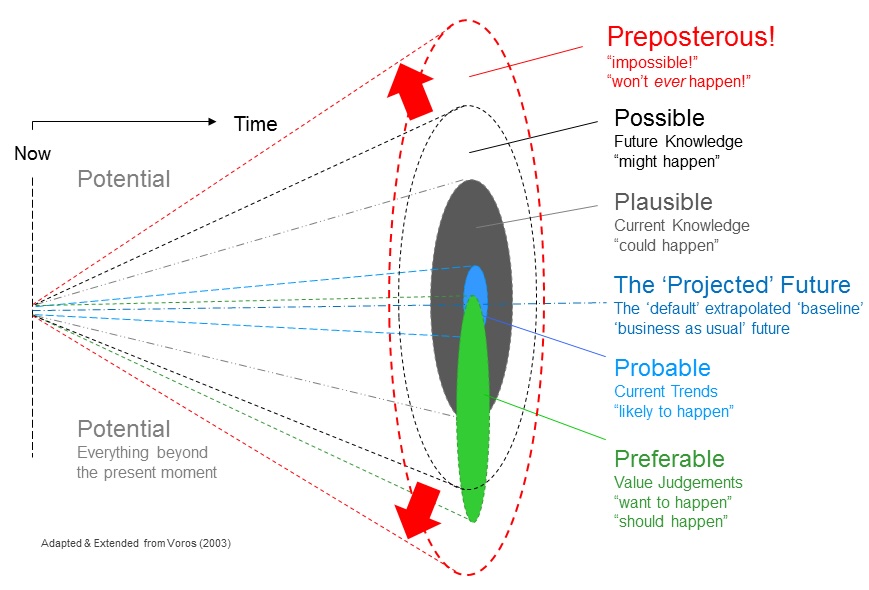
On the surface, this might not seem very different from what every designer has always done. They generate ideas just as futures designers imagine futures. The designer then shapes it so that it can be assessed, whether on a screen, on paper, as a prototype, or in a presentation. It just needs a form. Subsequently, based on criteria or intuition, you choose the best idea and work on it by developing and realizing it. In short, a standard design process where divergent thinking is followed by converging toward a solution.
However, there are differences. While a product designer conceives and works on a product purposefully, often with a design team, you cannot create a future alone. The future is unpredictable, unlike manufacturing methods. The future is also not predetermined, as material properties are. The future is influenced by a multitude of different individual behaviors and choices made by many people. While designing a product is often purposeful, designing a future is goal-finding and intrinsically social.
It’s precisely this aspect that makes Brian Eno’s quote so intriguing to me. By articulating or visualizing a desired future, people find and recognize their ambitions and needs. And if others perceive that world positively, we collectively strive towards it. In that sense, that world already exists once we conceive and share it. A shared dream that connects people and propels us forward. Meanwhile, the government can assist with policies and measures to occasionally nudge us in the right direction.
Without nudges and shared dreams, we are heading towards more inactivity and less trust. Crises usually don’t resolve themselves. Instead of passively moving towards that predictable and undesirable future, we want an alternative future. We need a narrative and interventions that steer us off course to achieve that. That is futures design. And that is also part of total design. In fact, that is Total Design. And it always has been.
Author: Martijn Arts, Strategy Director / Partner Total Design